Welcome to Somalia Stamps
A historic collection of 405 Somalia postage stamps

✨ Discovery of the day
Year: 1909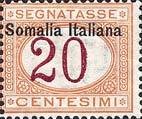
Somalia Postage - Segnatasse Overprint - 20 centesimo
This stamp represents the institutional development and fiscal administration of Italian Somaliland during the early 20th century. Rather than featuring a pictorial theme, the design focuses entirely on functional typography and numerical value, which is highly symbolic of bureaucratic organization, legal authority, and the establishment of structured postal tariffs in East Africa. The bold "Somalia Italiana" overprint on the standard Italian postage due design serves as a direct indicator of colonial governance, highlighting the period when the Italian Ministry of Posts and Telegraphs was systematically expanding its institutional framework into the Horn of Africa. This utilitarian approach to stamp design carries a clear message of administrative modernization and economic control, reflecting the transition of the territory from a series of coastal protectorates into an organized colonial economy dependent on standardized communication networks.
View Stamp Details →Collection Gallery
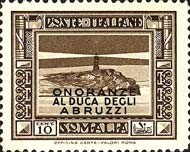
The Cape Guardafui Lighthouse - 10 centesimo
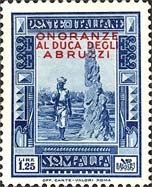
Somali Man and Termite Mound - 1.25 Lira
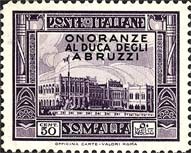
The Government Palace at Mogadishu - 50 centesimo
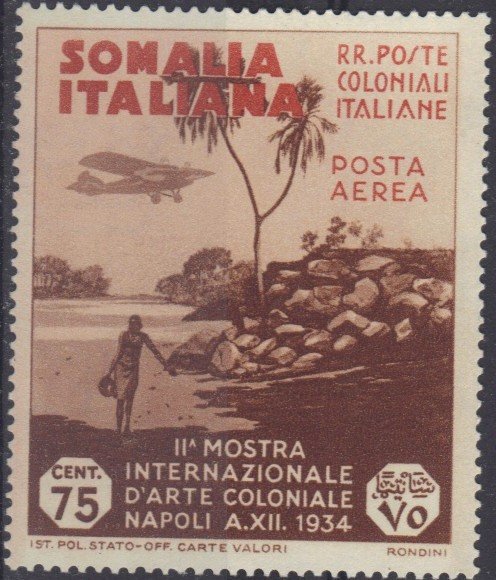
Coastline - 75 centesimo
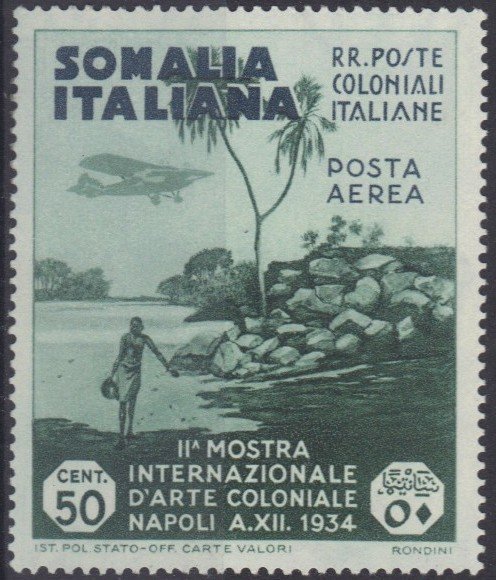
Coastline - 50 centesimo
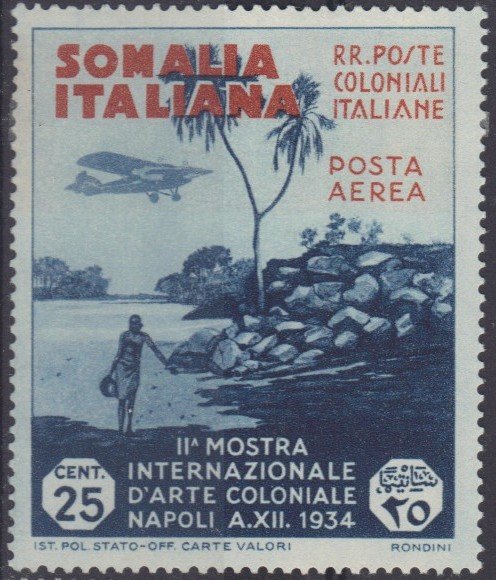
Coastline - 25 centesimo
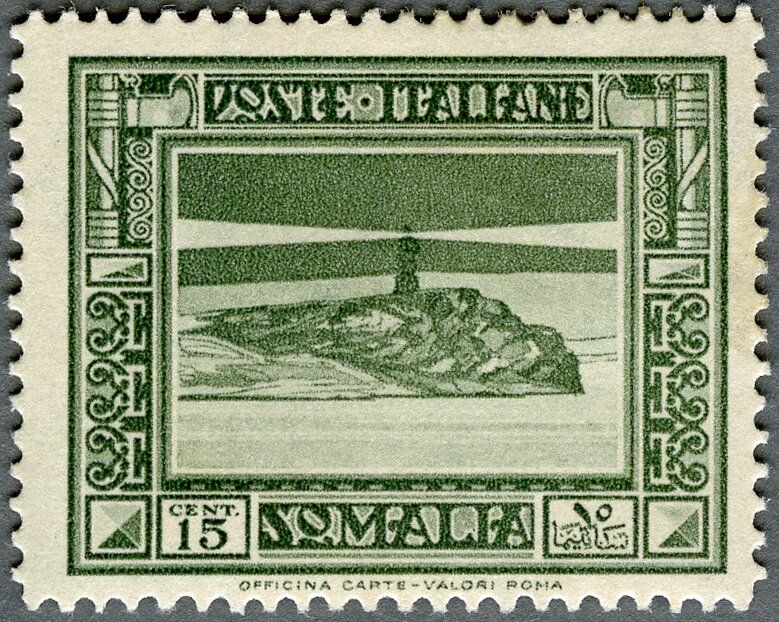
The Cape Guardafui Lighthouse - 15 centesimo
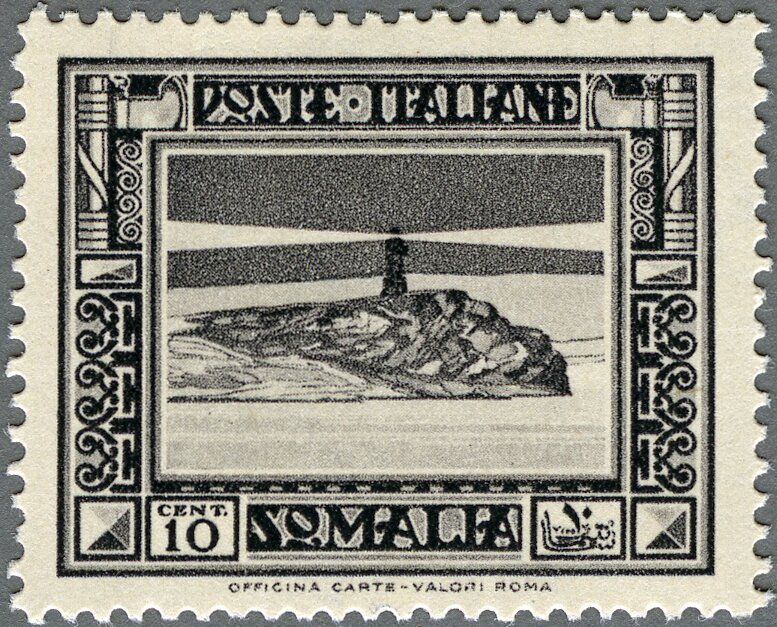
The Cape Guardafui Lighthouse - 10 centesimo
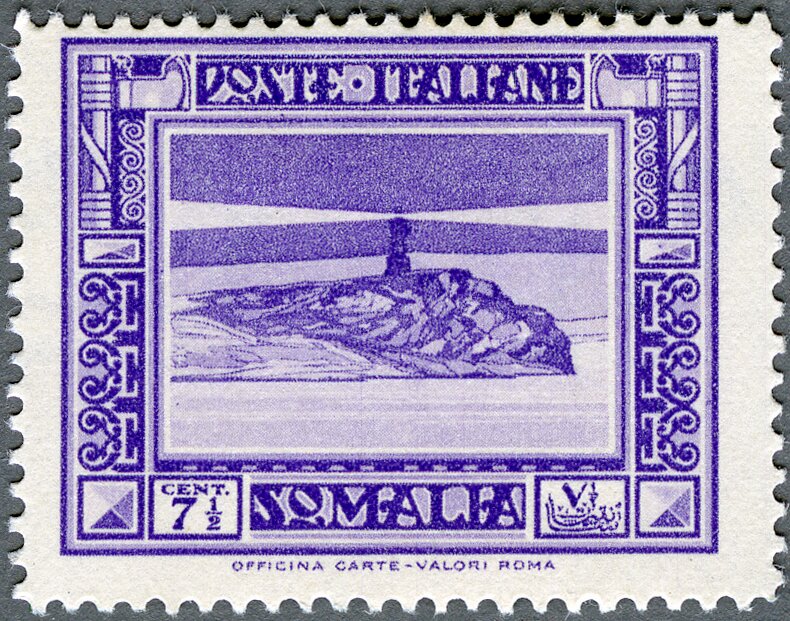
The Cape Guardafui Lighthouse - 7 1/2 centesimo
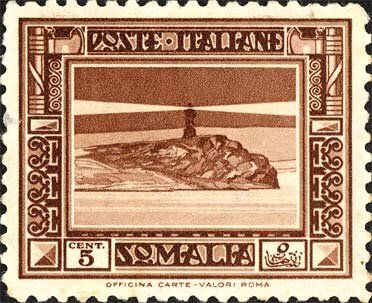
The Cape Guardafui Lighthouse - 5 centesimo
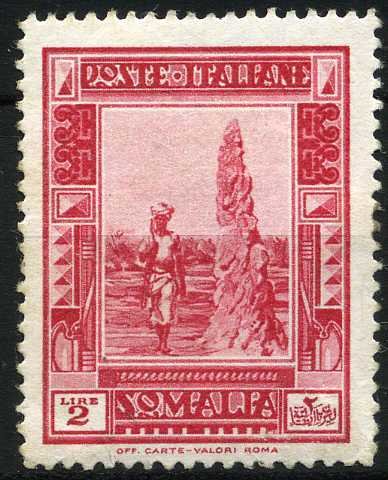
Somali Man and Termite Mound - 2 Lira
Somali Man and Termite Mound - 1.75 Lira
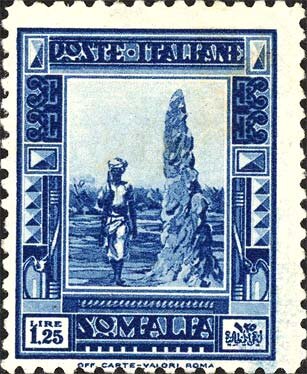
Somali Man and Termite Mound - 1.25 Lira
The Government Palace at Mogadishu - 75 centesimo
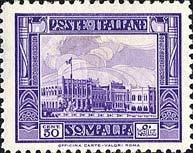
The Government Palace at Mogadishu - 50 centesimo
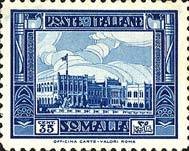
The Government Palace at Mogadishu - 35 centesimo
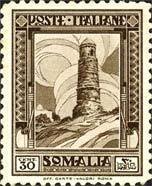
The Minaret of the Al-Mnara Mosque in Mogadishu - 30 centesimo
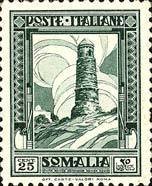
The Minaret of the Al-Mnara Mosque in Mogadishu - 25 centesimo
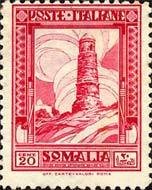
The Minaret of the Al-Mnara Mosque in Mogadishu - 20 centesimo
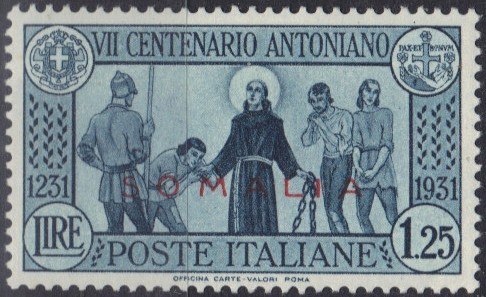
Saint Anthony Interceding for Prisoners

The Transitus (Death of Saint Anthony)
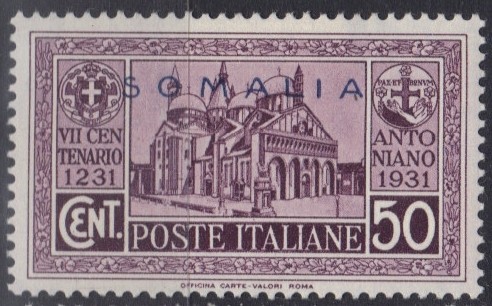
The Basilica of Saint Anthony of Padua
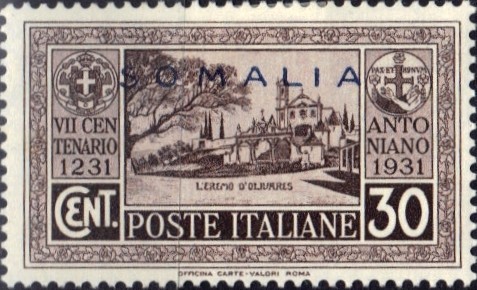
The Hermitage of Olivares